
My family and I recently visited Arezzo, Tuscany, between the 15-20 July to walk in the footsteps of my great grandfathers who fought to liberate the town. I have a much to write about regarding that special visit over the coming weeks and months ahead so please do subscribe to this blog to read more.
A key part of our visit was to pay respect to the ‘D-Day Dodgers‘ of the 3rd Battalion (Bn) Welsh Guards who ‘stayed in Italy‘ (exerpt below from the last verse of the well known song sang to Lili Marlene):
Looking ‘round the mountains, in the mud and rain,
There’s lots of little crosses, some which bear no name,
Blood, sweat and tears and toil are gone,
The boys beneath them slumber on,
These are your D-Day Dodgers, who’ll stay in Italy.
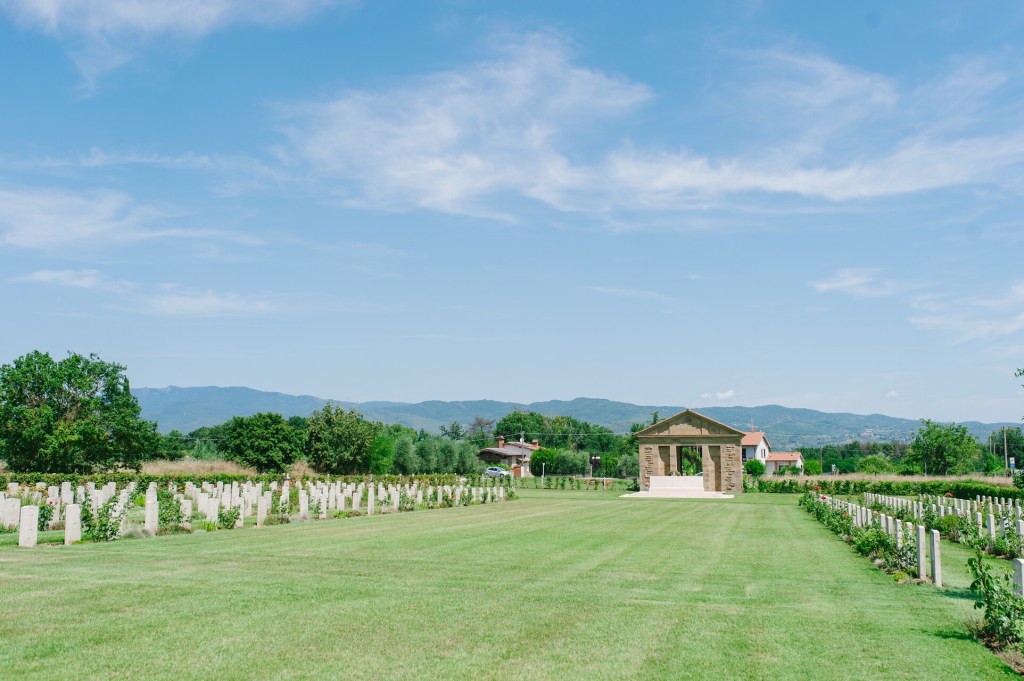
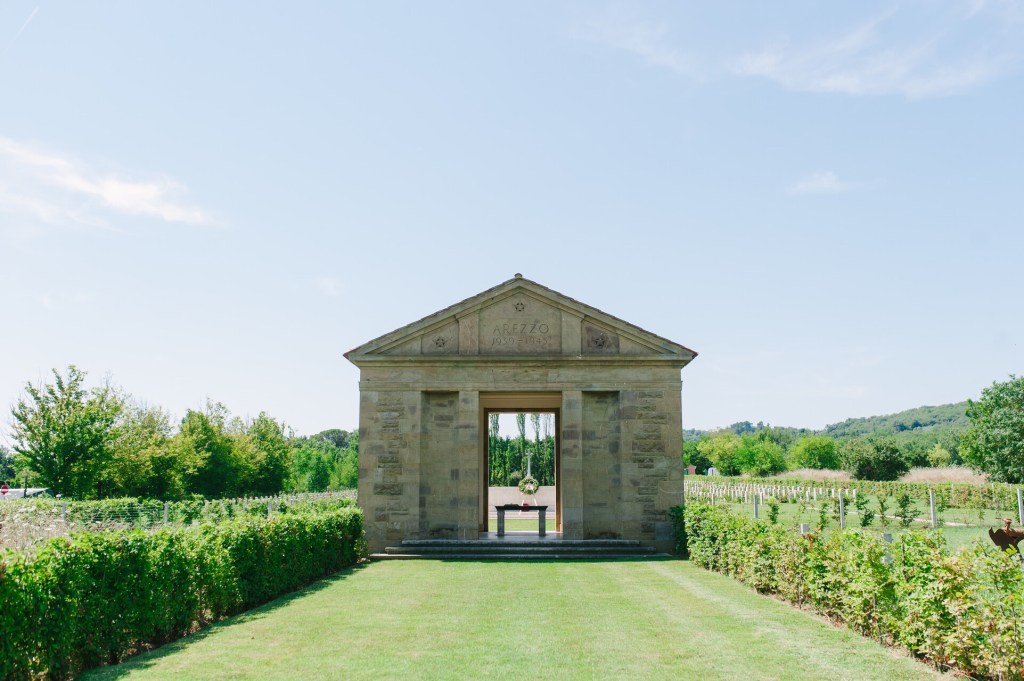
The Arezzo, Commonwealth War Graves Commission Cemetery at Indicatore contains the final resting places of 1232 service men, including five who served within 3Bn Welsh Guards (more on that soon too).

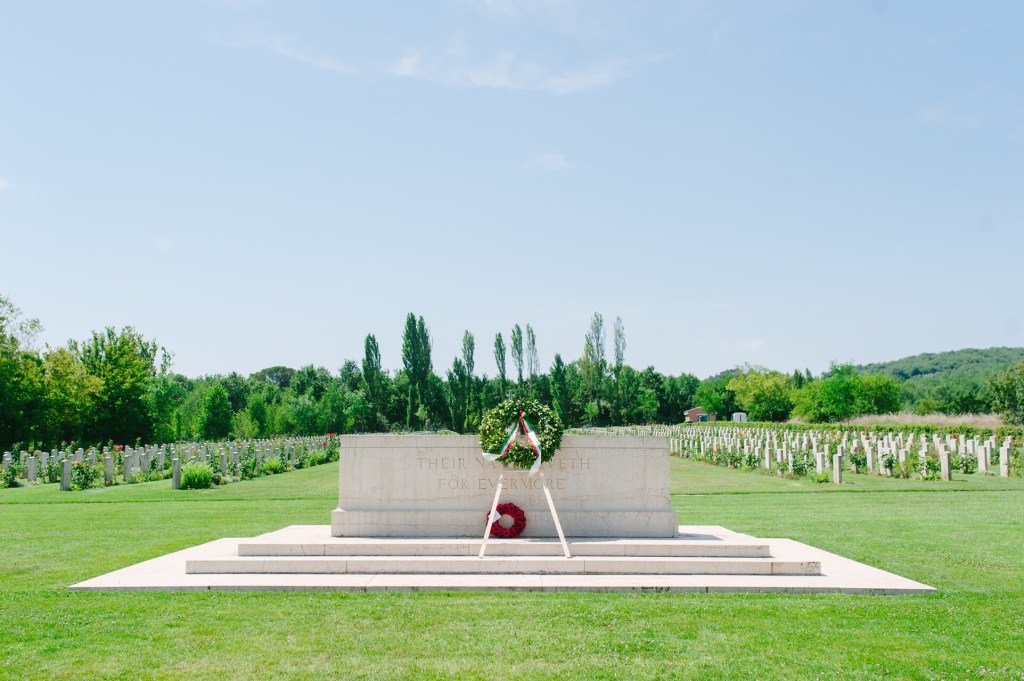
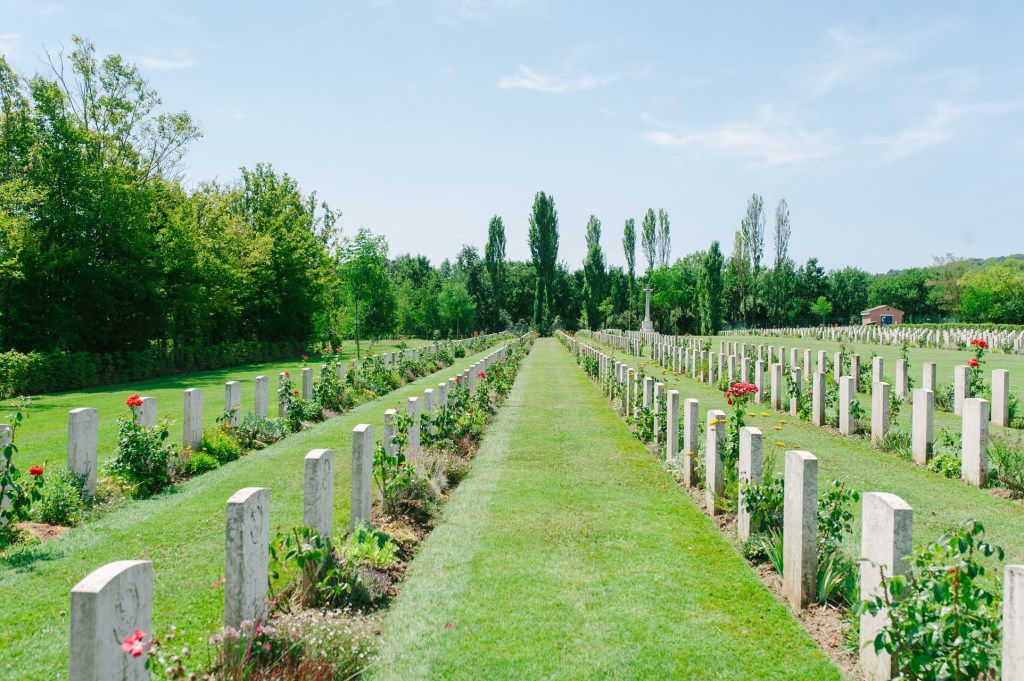
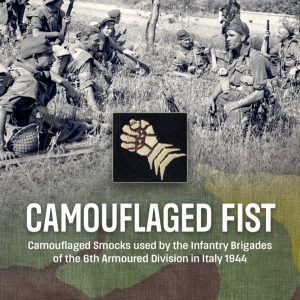
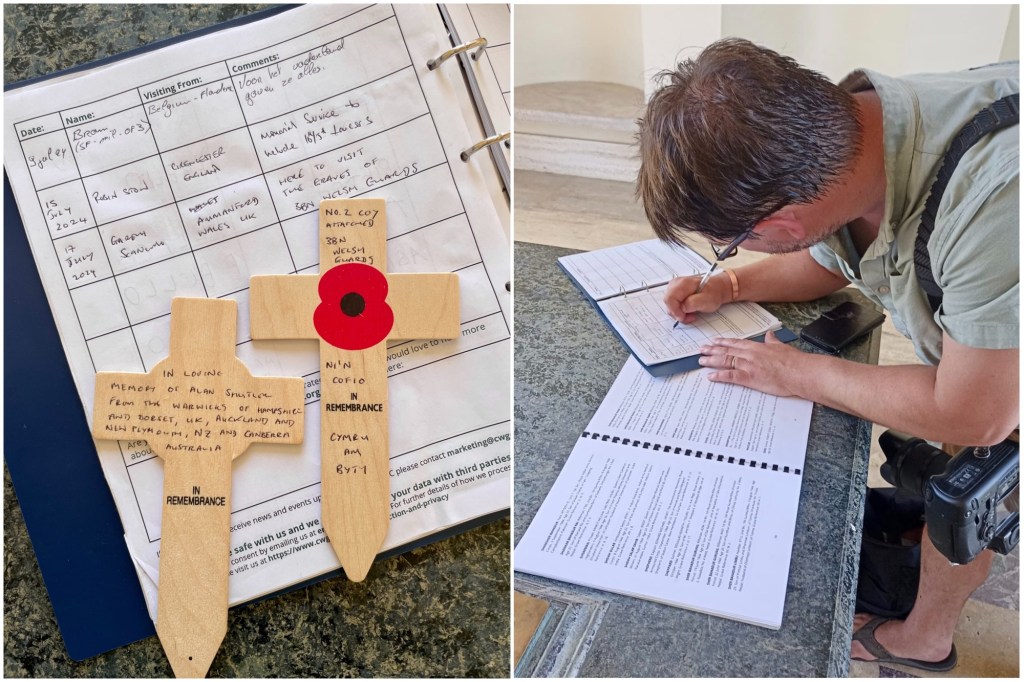
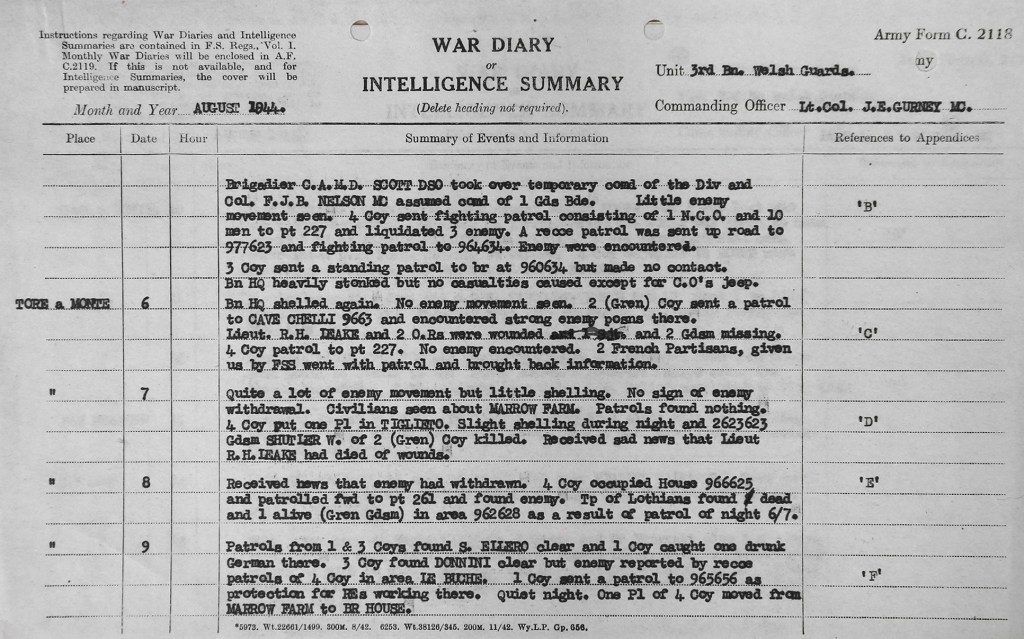
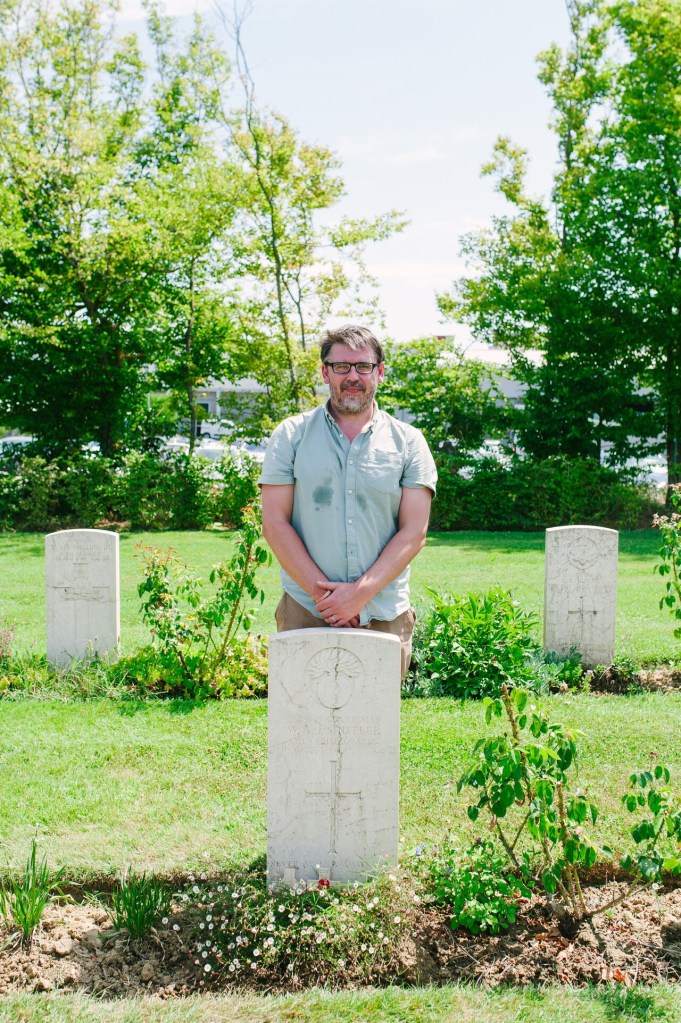
One of the 1232 men resting at Indicatore is Grenadier Guardsman Alan Shutler of 6 Bn Grenadier Guards, 201 Guards Brigade. He was the cousin of Dr Nigel Warwick who was kind enough to write the foreword of my book Camouflaged Fist. Alan was killed in action at Tiglieto on the night of the 7/8 August 2024 whilst serving within ‘2 Gren Coy’ with the 3Bn Welsh Guards.
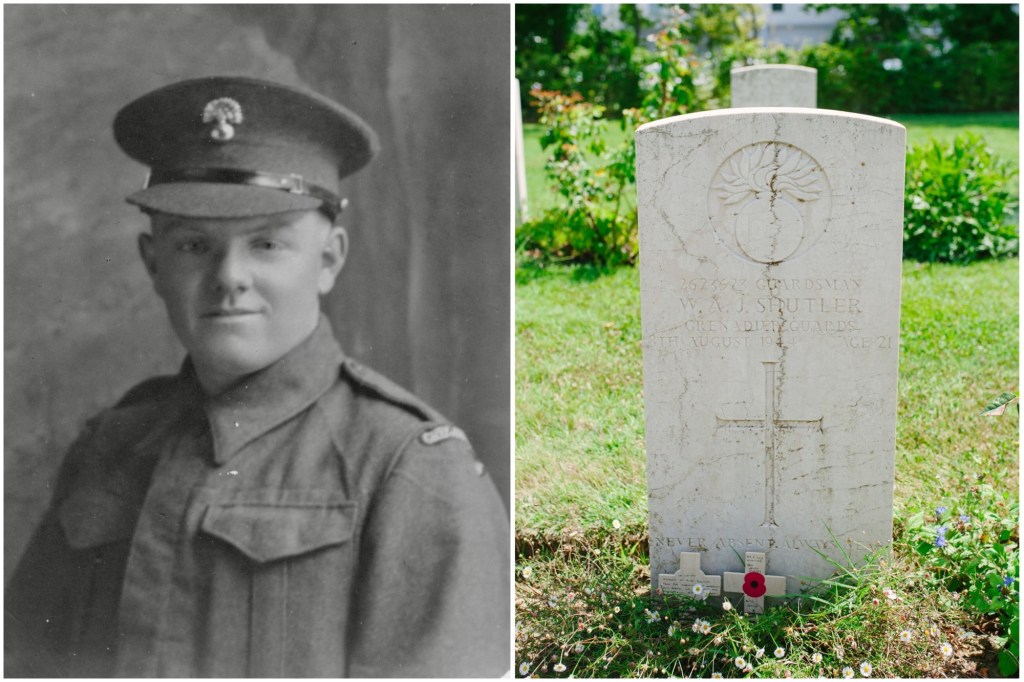
I was, and continue to be, extremely honoured to be have able to visit his final resting place and leave a message on the behalf of his family who are now spread across the world. Please forgive my blotchy clothing, it was very hot on 17 July with tempreatures soaring to 41C!

One might wonder how a Grenadier Guards Guardsman came to serve within the Welsh Guards. By mid-1944, Italy was facing significant manpower shortages as a consequence of the withdrawal of formations in preparation for the invasion of France through Operations Overlord and Dragoon (both to the north in Normandy and to the south in Provence).
A memo sent to the War Officer from AFHQ on 17 March 19441 references these challenges:

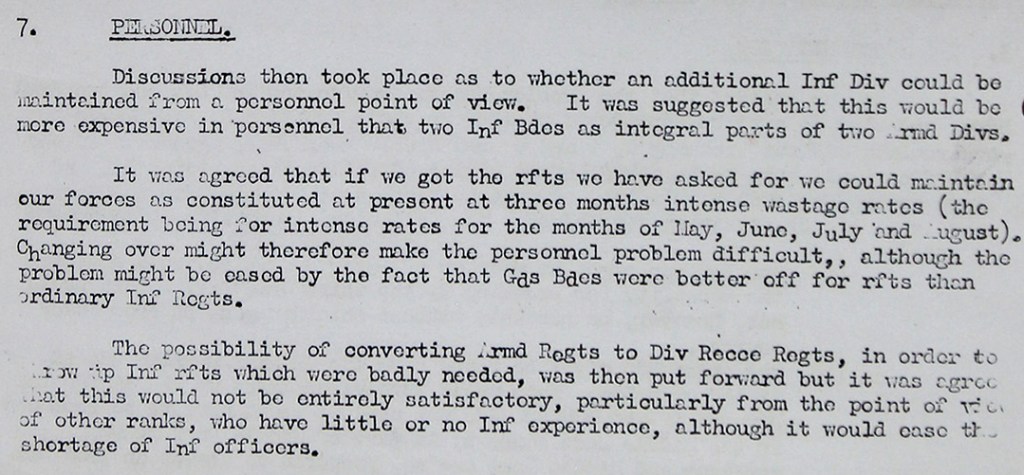
Despite this, minutes from an AFHQ (Allied Forces Headquarters) meeting held earlier on 17 January 1944 note an opinion that Guards Brigades were deemed ‘better off‘ in terms of the security of supply of reinforcements in comparison to that of ordinary Infantry regiments. With some 15 months of the war left to fight at this stage, their concern for the overall resourcing situation is palpable2:
The 1st Guards Brigade were quick to ‘innovate-their-way-out’ of this problem by launching an experiment to draft entire Coys from other Guards regiments to replace those lost in another. They were the first to trial this.
In response to heavy losses suffered by 2Bn Coldstream Guards on Monte Ornito (Gargliano Salient) in February 1944, ‘S’ Company of the Scots Guards3 became the fourth rifle Coy of the Coldstream Guards on 28 March 1944. Whilst this experiment was only intended to be a short-term solution, they remained with 2Bn Coldstream Guards for 12 months. Michael Curtis states:
“There were certain doubts as to whether the chemistry would be right and if this cross positing would be successful, but the Scots Guardsmen settled down very quickly in their new role”.4
The memoire of Andrew Gibson-Watt (an officer serving in 3Bn Welsh Guards) states, thereafter, that it became:
“standard practice for the foot guards in World War Two to attach an entire company of one regiment to an understrength battalion of another. The 2nd Coldstream in our brigade had ‘S’ Company Scots Guards, who won high regard. In the Guards Armoured Division (who were fighting in Normandy), the doughty ‘X’ Coy Scots Guards fought first with the Irish Guards and then with our 1st Battalion (Welsh Guards). The Guards were lucky to be able to do this, rather than simply draft men in and ‘re-badge’ them as the line regiments were obliged to do”5.
Similar to the experience of 2Bn Coldstream Guards at Monte Ornito, 3Bn Welsh Guards suffered 22 killed, 90 wounded and 8 missing at the battles for the hills of Arce during late May 1944. Their No.2 Rifle Coy was almost totally destroyed during the engagement and on account of the this the 3Bn Welsh Guards War Diary records its reorganisation on 30 May 1944:
“STH OF MTE PICCOLO – 30 (May) – Bn re-organised on 3 Coy basis – 2 Coy L.O.B. (left out of battle). Mobile baths throughout day. GOC and Brigadier visit Bn at 1700hrs. Draft arrives from I.R.T.D.”6.
Despite this entry, the understrength No.2 Company is often recorded within the 3Bn Welsh Guards War Diary as being the reserve company during June and until the 18 July 1944. From 18 July a company from 6Bn Grenadier Guards, akin to the example of ‘S’ Coy, temporarily became the No.2 Rifle Company of the 3Bn Welsh Guards:
“PULICIANO (near Arezzo) – 17 (July) – C.O. went to the ‘CARDIFF ARMS’ to visit 2 (Gren) Coy who had just arrived. (Offrs – Major WILLIS, Lieuts WHEATLEY, LEAKE and CREWDSON). Coy appeared from all accounts to be a very good one. Most of the men were ex 6 Bn and they had come from the 201 Gds Bde. The C.O. was accompanied by the R.S.M. C.O. attended Bde Conference at 1700hrs. Mobile Bath and Cinema for Bn.
PULICIANO – 18 (July) – 2 (Gren) Coy joined the Bn and occupied billets at PULICIANO 2624”7.
This was how Alan was to fight, and ultimately lose his life, alongside Welsh Guardsmen in the fighting around Florence.
The 3rd Welsh Guards War Diary records that on 23 August 1944, at Ripalto, near Figline Valdarno, it received three officers and 98 other ranks from the Infantry Reinforcement & Training Depot (I.R.T.D.) to reinforce its numbers. As a concequence ‘2 Gren Coy’ left 3Bn Welsh Guards.
More examples of the innovations made at strategic, tactical and operational levels throughout the campaign are covered in Camouflaged Fist which is available here.
Once again, it was an absolute honour to visit and pay respects to Alan, and the other D-Day Dodgers, who paid the ultimate price in liberating Europe from nazism and fascism.
Thanks for reading,
Gareth
- The National Archives, War Diary WO 204/10206 Reorganisation of formations – January-December 1944, Memo to D.I.D War Office from Chief of Staff Lieutenant General J.A.H. Gammell, AFHQ, March 1944. ↩︎
- The National Archives, War Diary WO 204/10206 Reorganisation of formations – January-December 1944, Minutes of AFHQ Meeting 17th January 1944 concerning Re-organisation of Forces, page 2, section 7. ↩︎
- Having been trained together as a Company in North Wales, it was then at No.1 (Guards) Battalion, I.R.T.D. (Infantry Reinforcement and Training Depot) at Rotondi, Italy. ↩︎
- Curtis, Michael – A Pilgrimage of Remembrance (Self Published, 2004), 12. ↩︎
- Gibson-Watt, Andrew, An Undistinguished Life (Chippenham: Antony Rowe Ltd, 1990), 144-145. ↩︎
- The National Archives, War Diary WO 170/1355 3rd Battalion Welsh Guards, January-December 1944, Diary Entry 30th May 1944. ↩︎
- The National Archives, War Diary WO 170/1355 3rd Battalion Welsh Guards, January-December 1944, Diary Entry 17th July 1944 ↩︎
 Camouflaged Fist
One thought on “Honouring the D-Day Dodgers: Paying Respects to Alan Shutler, ‘2 Gren Coy’, 3Bn Welsh Guards, Arezzo CWGC, 17 July 2024”