
Introduction
I recently posted on my social media channels about how fantastic it was to meet Catherine Bowen and be able to copy and photograph pics and other items retained by her grandfather 2737719 L/Cpl Gerwyn Jones.
It was a privilege to have been able to scan his photographs which contain so many interesting details of vehicles, uniform wear etc. I was delighted to see that Gerwyn has retained his original squad photo, and casting my eyes over the photograph, I immediately recognised several faces and names as also being members of 3Bn.
Squad Photographs
The quality of Guards squad photographs is always incredible. For those that might not have seen one in hand, they are large – a little over 14 x 11 inches. They were almost certainly taken on large format cameras as the detail resolved in them is outstanding for a print of this size.
Whilst such photographs are replicated through other foot guard regiments, (being completely polarised on the Welsh Guards) I’m not aware whether this was custom and practise in regular line infantry regiments too. These photographs mean that, potentially, it is possible to obtain an image of every single guardsman that served, if such a collection somewhere survives that is. This also applies to officers whose Brigade Squads were similarly photographed.

Post-Dunkirk 1940 inevitably saw a mass call-up for all services and across the U.K. Several hundred men enlisted in the Welsh Guards during this time. They were assembled into training squads which were supported by experienced non-commissioned officers and ‘trained soldiers’ to turn those called-up into effective fighting soldiers.
The ‘Database’: Unlocking Pictures
As I have previously articulated in other posts, here and on social media, I have been gathering up a significant amount of information regarding the men and officers of 3Bn from several sources including (not exhaustive) books, magazines, journals, letters, Ancestry, British newspaper archives, war diaries, records from The National Archive, Welsh Guards Regimental Archive, personal diaries, family archives, museums and so on. It is believed that 3Bn had c.2000 men that served within it throughout the war, and I now have details of about 1400 of them, some inevitably with more detail than others. This database has become the backbone of all of my research.
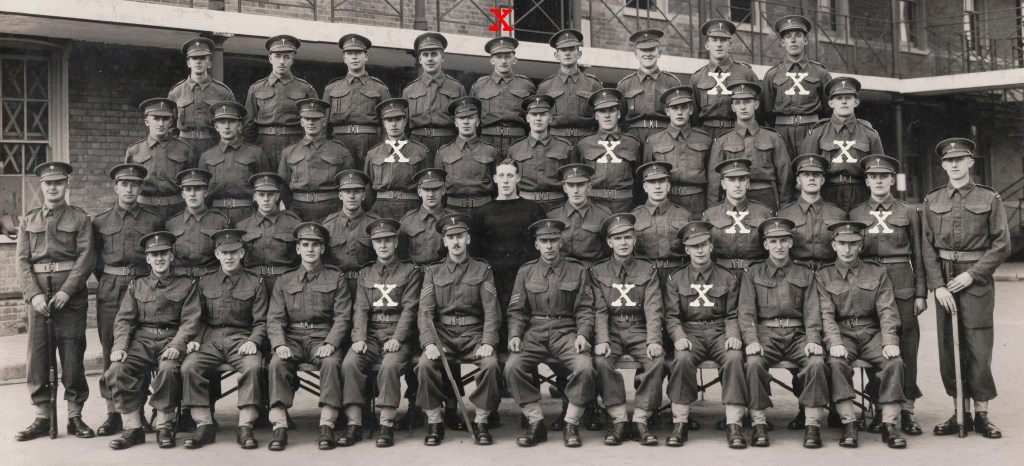
As a researcher, looking at these squad photos, I use my database to confirm the date of enlistment of one of the men photographed (whose identity I can confirm from my roll) and then search for others who enlisted near that time, and marry the names in the database with those in the photograph. As I said above, I recognised several faces and names, but the above approach allows me to pinpoint some of the men with more common names such as Jones, Davies, Evans, Williams (in the case of the Welsh Guards and Welsh names in particular) and identify them with certainty. You will see below, that (with the exception of Gerwyn) all of these men enlisted during August 1944.
Again, demonstrating the depth and importance of the database, I was able to identify a further ten men who served with 3Bn. Given that I still have some c.600 men to find – there may be a few more in this pic too. The crop below shows Gerwyn, who retained the photo, with a red X and the other ten 3Bn men identified with white X’s:
The Men of 3Bn: Short Stories
Now, on to the chaps themselves … Gerwyn first, and the top row down and left to right thereafter:
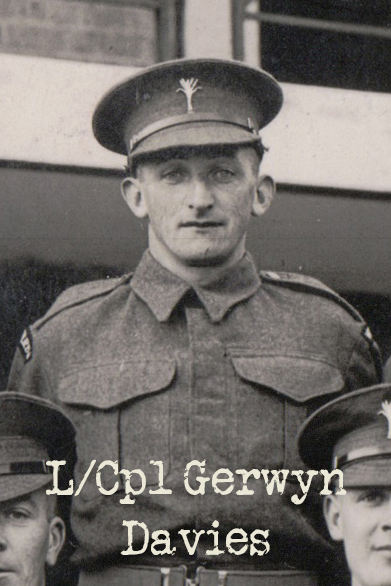
Gerwyn was a Carmarthenshire boy (as am I), who enlisted in the Welsh Guards on 9 June 1940 at Llanelli. He lived and worked at Sarnau House near Bancyfelin and enlisted with his employer ‘Johnny’ Buckley, who by the end of the became a Major.
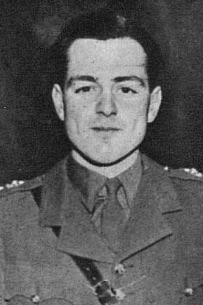
Gerwyn became his soldier servant and they joined 3Bn in Tunisia (after the cessation of hostilities) from the No.1 (Guards) Infantry Reinforcement and Training Depot (I.R.T.D.) on 20 May 1943. Following the intensive period of training in North Africa, Gerwyn and Johnny were sent to Italy in the ‘advance party’ ahead of the bulk of the Bn (albeit … they weren’t the first Welsh Guardsmen in Italy by any stretch … more on this soon!).
Johnny, then at Lt. Platoon Commander in No.4 Coy, was wounded on 13 March 1944 by a German grenade whilst visiting the platoon positions when the Bn was deployed at Monte Purgatorio in the Garigliano salient of the Gustav Line. He was subsequently evacuated to the U.K. for treatment.
Following this, Gerwyn remained in Italy and became a L/Cpl and finished his war with the rest of the Bn in Austria 1946. His discharge papers state:
“This NCO has given excellent service in his Regt. in and out of the battle, during the war. He deserves every consideration.”
I’m so glad he kept this photograph!
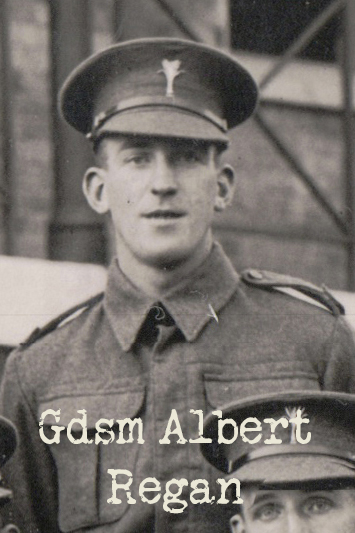
2737590 Guardsman Albert George Regan was from Pontypridd. Before enlisting in the Welsh Guards on 22 August 1940, he worked in the South Wales Electric Power Company. He served in No.1 Coy with the battalion through Tunisia and Italy. An unknown newspaper cutting owned by the author dated Saturday, 29 April 1944 (likely the Pontypridd Observer) published a story regarding his exploits at Monte Cerasola in February 1944 :
“Pontypridd Guardsman’s Bravery. From Italy comes the news that the Welsh Guards are playing a notable part in battles with the finest troops the Germans can muster. As might be expected, men from the mining valleys are distinguishing themselves in these actions. The case of Guardsman Albert George Regen, 1 Birdfield Cottages, Graig, Pontypridd, provides a typical example of the initiative and heroism of the Welsh Guardsman. Guardsman Regan and another Guardsman went well behind the enemy lines, contacted four machine-gun posts saw an enemy mine-laying party, and shot up a Boche patrol, returning to their own lines with very useful information.”
Three months later on 29 July 1944, the Pontypridd Observer, published another story concerning ‘Bert’ Regan:
“Graig Brothers in Rome – Mr J Regan, Birdfield Cottages, Graig, had a pleasant surprise last week when he received a letter from his son Pte Albert Regan Welsh Guards, who is serving in Italy. He stated that he met his brother, Pte Edward Regan, and spent two days with him. This was the first time for them to meet for four years. Both are well and had a fine time sightseeing in Rome. Edward wrote to Albert’s commanding officer asking him to grant Albert two day’s leave. This he did, and provided conveyance for Edward to the camp where his brother was stationed. Edward served throughout the desert campaign with the “Desert Rats”. Another brother, John, is serving in the Army in this country. Mr Regan sends all three boys the ‘observer’ which they say is welcomed by Pontypridd boys next only to letters from home.”
Albert survived the war and was discharged on 14 February 1946.
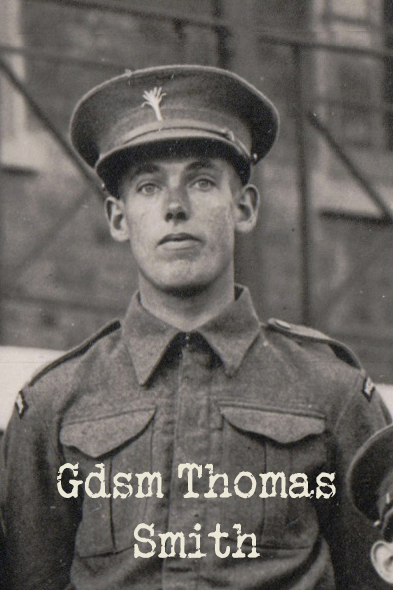
2737597 Guardsman Thomas Charles Smith lived in Cwmyay Lower near Abergavenney and enlisted in the Welsh Guards on 22 August 1940. He was seemingly badly wounded at the battle of Fondouk in Tunisia on 9 April 1943. He was discharged before the war ended on 23 February 1945 having been declared permanently unfit for any form of military service.
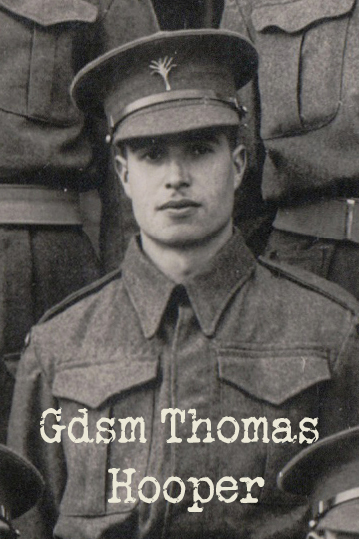
2737565 Guardsman Charles Thomas Hooper enlisted in the Welsh Guards on 9 August 1940. He served with No.4 Coy and was wounded when the Germans attacked the battalion at Monte Cerasola, Italy, on 11 February 1944. This happened just as they were taking over the position from the 5Bn Hampshire Regiment. The guardsmen, being physically much larger than the those of the Hampshires, were enlarging their sangers in a middle of a blizzard when the Germans attacked. He returned to No.4 Coy and served throughout the rest of the campaign being discharged on 25 March 1946.
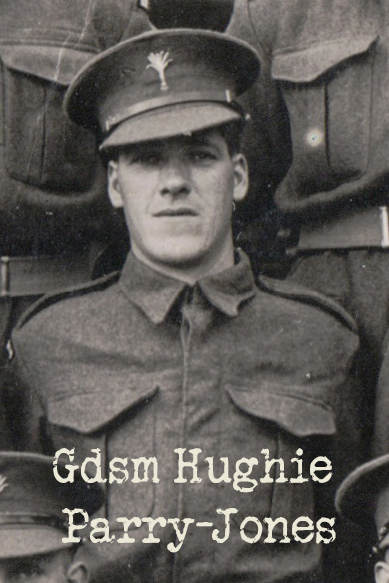
2737584 Guardsman Hughie Parry-Jones enlisted in the Welsh Guards on 22 Augst 1940. He served in No.3 Coy and was captured by the Germans during a platoon strength fighting patrol, codenamed Cardiff, led by Lt. Gerald Seager on 6 September 1944 (who incidentally was from Cardiff himself!). Gdsm 2736291 Thomas Pope provided the following witness statement to the capture of several members of the patrol:
“I was a member of the fighting patrol which left MADDONA-DEI-POSSI at 0615 hrs under Lieut. Seager. We reached out (.sic) objective – CIGLIANO without incident. Mr. Seager went forward into the village with two men, Sjt Williams and Gdsm Doel, to establish it clear of enemy or otherwise. Thinking it apparently clear he sent back Gdsm Doel for the rest of the patrol. We were in the village for fifteen minutes without incident, when a German sentry was seen and Sjt HUGHES opened fire and killed him. A sharp engagement ensued, and after a little while Mr. Seager, seeing that the enemy were being strongly reinforced, told Sjt HUGHES to try and get a few people out before being cut off. Mr. Seager, … and others … failed to get out, and to the best of my belief were taken prisoner.”
Hughie was one of those who stayed with Lt. Seager and spent the remainder of the war as a PoW interned at Stalag XI-A at Altengrabow, Saxony-Anhalt.
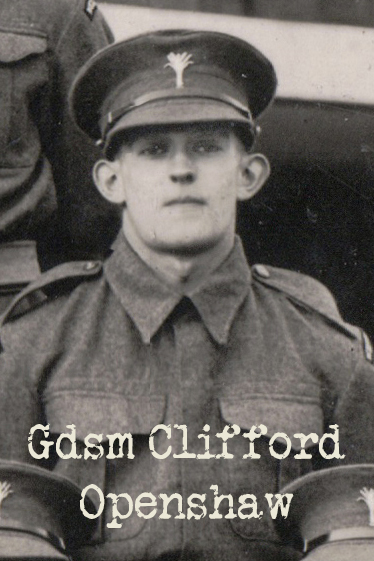
2737371 Guardsman Clifford Openshaw enlisted on 8 August 1940. He was to become one of the first casualties of 3Bn and was killed in action whilst on a night patrol to secure prisoners near Medjez-El-Bab, Tunisia, on 24 March 1943. An eyewitness account provided by the Second in Command of the Section, 2735402 L/Cpl Davies states:
“Our task was to capture a prisoner in the village of GRICH-EL-OUED near Medjes (.sic). We set out to our assembly area but was fired upon a few yards short. We then laid in wait until the barrage lifted, then we carried out our plan, which was to storm any resistence (.sic) and take a prisoner. The withdrawel (.sic) signal was two long blasts on the whistle. On the left, we attacked and was met with heavy M.G. fire.”
He was the son of Edwin and Catherine Openshaw of Ainsworth, Lancashire. He rests at CWGC Massicault Cemetery in Tunsia. His grave is marked “Not gone from memory, not gone from love, but gone to our father’s home above”.
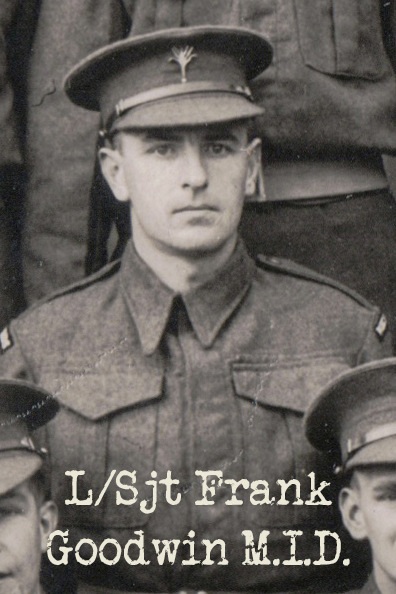
Firstly, I wish to declare that I have read so much about this incredibly duty-bound, steadfast and incredibly brave man over several years, and I’d not seen in all this time a photograph of him – until Wednesday last week …
2737556 L/Sjt Frank Goodwin was born on 28 July 1909 at Rhydyrmwyn, near Wrexham, Flintshire. Before enlisting in the Welsh Guards on 22 August 1940, he was an omnibus conductor and lived at Goleufryn, Zion Street, Cefn, Denbighshire. He served in 1 Platoon, No.1 Coy throughout the campaign in Tunisia and distinguished himself at Fondouk. This resulted in his promotion to L/Cpl on 18 May 1943. He again, distinguished himself in Italy, during the attack on the 11 February 1944 (again, as above) at Monte Cerasola and was appointed L/Sjt the following day. He was killed in action at Monte Piccolo on 28 May 1944.
I have several accounts of his actions, all made in support of the bestowal of the Victoria Cross. Here is one from 2734526 Sjt Elfed Morgan, who himself, won a Military Medal as Platoon Sjt of 1Pl. at Monte Piccolo (N.B. One of my grandfather’s Glyn was in 1.Pl No.1 Coy and would likely have both participated in, and witnessed this event).
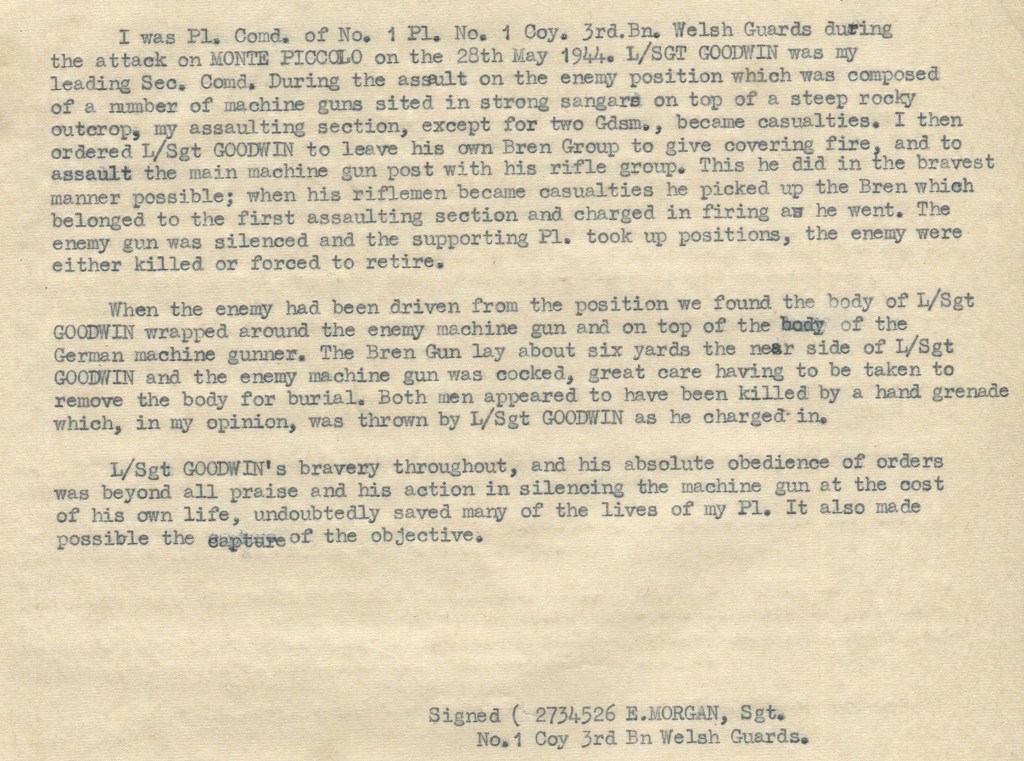
It was his assault that became the tipping point of the battle which forced the Fallschirmjäger (elite German Paratroopers) to turn and flee. Despite concerted and continued efforts (even into the 1950s) by several 3WG officers, L/Sjt Goodwin would not receive a posthumous Victoria Cross. As only the VC or MID can be bestowed posthumously, he received the latter. Lt.Col. David Davies-Scourfield always referred to Goodwin, as “the bravest Welshman I knew”.
He rests at CWGC Cassino Cemetery. He was 25 years old when he died, the son of John and Mary Goodwin, husband of Marie Elizabeth Goodwin. His grave is marked with “Mae’n felys meddwl eto nghyd cawn gwrddyd yn y nef. Atgofion Melus” or, “It’s sweet to think we’ll meet again in heaven. Sweet memories“.
As an aside, one of his brother was also killed in action whilst serving with 2Bn Welsh Guards (Armoured Reconnaissance) in North West Europe. It is said that he was shot by a sniper whilst lighting a cigarette in the cupola of his tank. Another brother was in the Royal Welch Fusiliers, and never saw overseas service, likely a deliberate intervention by the Army.
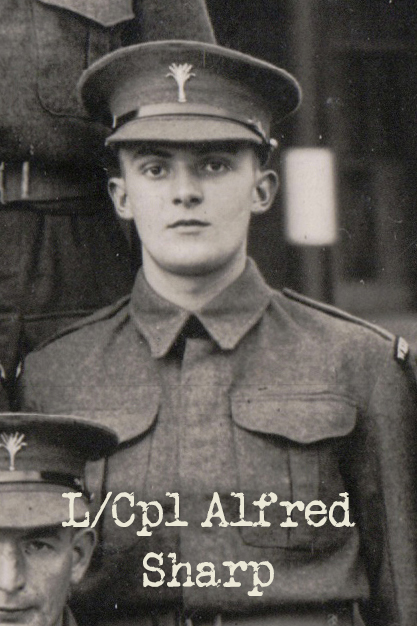
2737627 L/Cpl James Alfred Sharp enlisted on 10 August 1940. He likely served with No.1 Coy as he was wounded on 28 May 1944 at Monte Piccolo (1 Coy were tasked to move through 2Bn Coldstream Guards to take the hill, as per the account relating to Frank Goodwin above). He served throughout the Italian Campaign and was discharged on 5 January 1946.
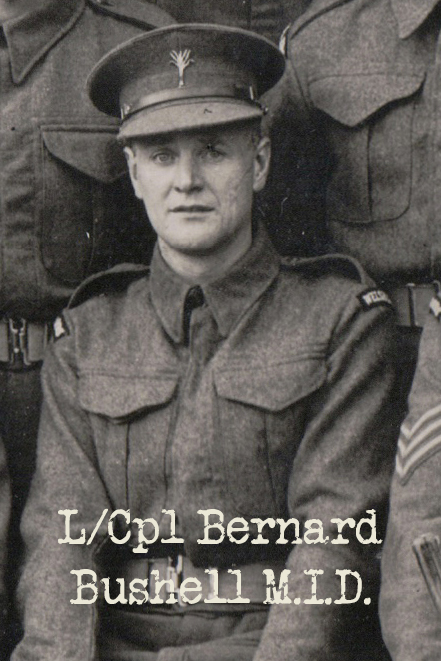
2737545 L/Cpl Bernard Bushell enlisted on 22 August 1940. On 31 March 1944 he was reported to be driving the Commanding Officer in his Humber. It is not clear, at this time, whether he was a part of Bn H.Q. or why he was Mentioned in Dispatches. He survived the war and was discharged on 13 January 1946.
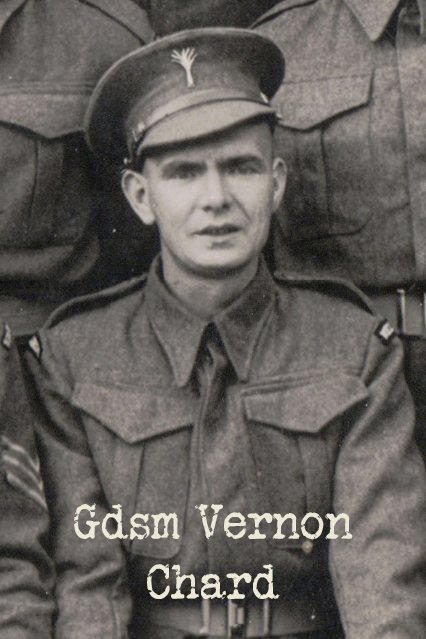
2737547 Guardsman Vernon Chard enlisted on 22 August 1940. The author has several photographs that he retained after the war. It is not yet known what company he served in, he is was listed as wounded at Monte Cerasola on 11 February 1944 (during the same action referenced in the accounts of Gdsm Hooper and L/Sjt Goodwin above), but was later recorded as ‘not a battle casualty’. Other accounts, suggest that he was. He transferred to the Royal Army Ordnance Corps (R.A.O.C.) on 4 May 1945 after the cessation of hostilities in Italy.
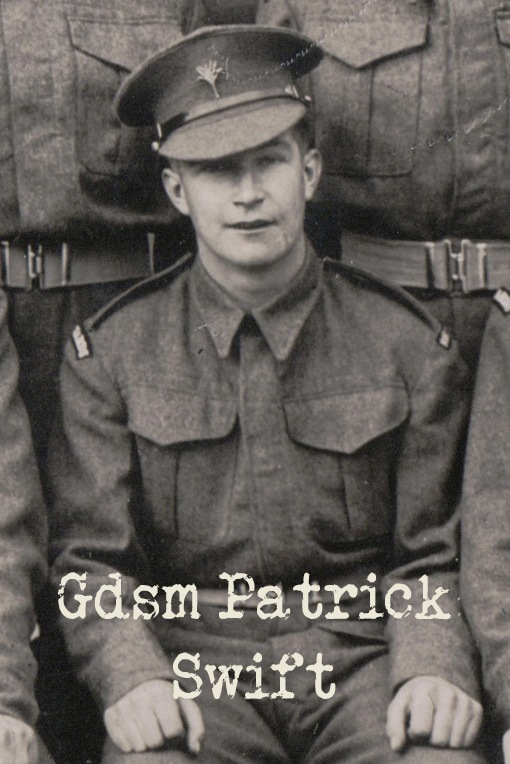
2737599 Guardsman Patrick Smith enlisted on 22 August 1940. He was wounded during the assault on the djebels at Hammam Lif, Tunisia on 8 May 1943, as was one of my grandfathers. He later served throughout the campaign in Italy and was discharged on 1 February 1946.
Conclusion
It’s such a privilege to see personal archives such as Gerwyn’s, and I’ve been lucky to see several more. I use this information, as per this article, to ‘fill in gaps’ and give extra information to families.
As a consequence, the web of interconnected information I’ve gathered enables me to map people to events and be able to tell the story of these men on a day-by-day and blow-by-blow basis.
Please do reach out if you have anything relating to the 3WG you think may help me in this endeavour.
I will use everything I’ve gathered to honour those who served in the Bn by telling their ‘real’ story in my forthcoming book “The Forgotten Fighting Third”.
I sincerely hope you’ve enjoyed reading this,
Diolch yn fawr iawn,
Gareth
 Camouflaged Fist