
Introduction
Those of you who a regular readers of my ramblings will be well aware that my principle focus concerns the men of 3Bn who fought in the campaigns in Tunisia and Italy. To that end, I have narrowly honed in on the period of time that the battalion was overseas between 1943 and 1945.
Inevitably, to most lay people within the U.K. and beyond, the Welsh Guards and indeed other regiments of the foot guards are best known for their formal ceremonial duties adorned in red tunics, navy trousers, bearskin caps and coloured plumes. Indeed several people I have spoken to regarding my interest (read as obsession) over the years are wholly unaware that foot guards are actual operational soldiers!
Of all of the three wartime service battalions it was 3Bn who were committed the longest overseas. As a result, most of the items I have photographed, handled or own inevitably relate to this period. It’ll be no surprise that these are generally combat related items and not those associated with ceremonial duties.
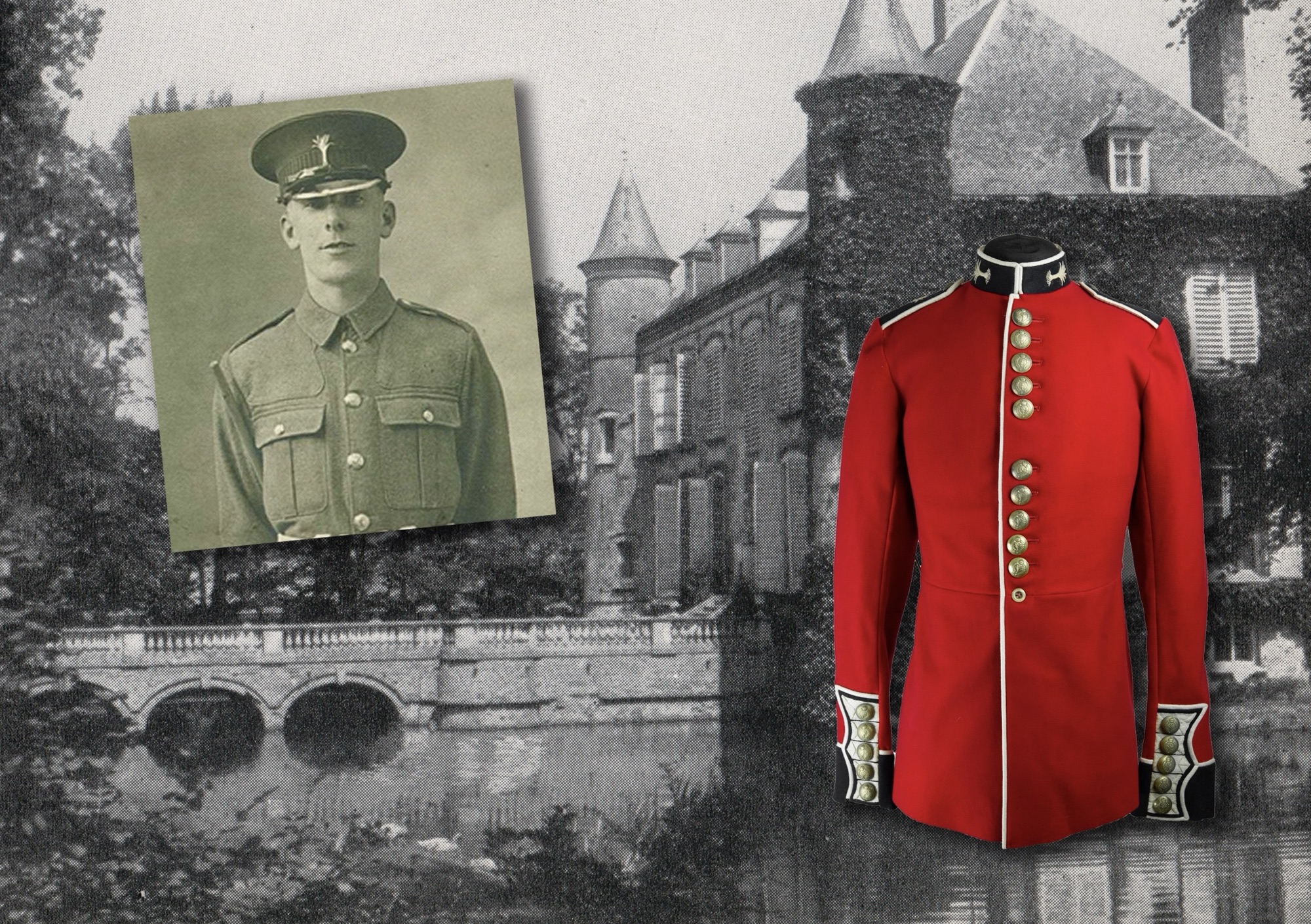
Earlier this week I met ‘Taff’ Collins who lives nearby, himself a veteran and medal collector, to look over some items relating to local men who served in Italy. Whilst there, ‘Taff’ went to fetch some additional items and returned with an absolutely beautiful 1937 dated Welsh Guards ceremonial tunic owned by a mutual friend, Paul Evans ‘70’ – himself a former Welsh Guardsman.
As I looked at the garment, I thought of the two photographs I have of one of my Great Grandfathers Glyn in ceremonial dress:
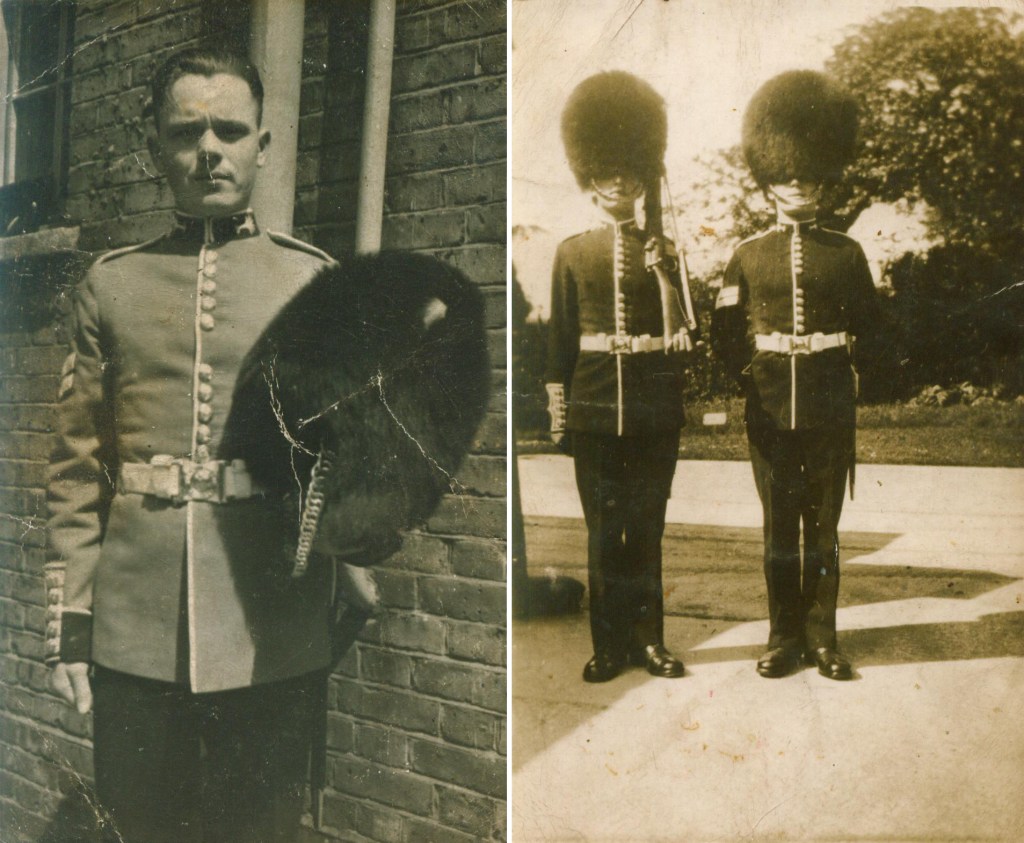
I also thought of my other Great Grandfather Sam who married my Great Grandmother Elaine, a maid at Buckingham Palace. As a family, we inevitably surmise that him being a guardsman and she a maid at the palace that this is how they likely met
Needless to say, the tunic came home.
The Tunic
Given my focus as outlined above, despite knowing a great deal about the uniform and kit used by the service battalions in theatre, I know comparatively very little about ceremonial dress.
What I do know is that during the First World War, foot guard regiments ceased issuing scarlet tunics upon mobilisation in August 1914. Following the end of hostilities, they began to wear them again in around 1920 and from there on in, for the remainder of the army, red coats were only authorised for wear by regimental bands, officers in mess dress or on certain limited social or ceremonial duties (e.g. court functions or weddings). The reason for this was purely financial as the scarlet cloth required expensive cochineal1.
I can only surmise that the same applied during the Second World War in so far that ceremonial dress was effectively shelved.
I have not seen a single photograph of 3Bn men wearing any ceremonial dress whatsoever. Of the parades that they did partake in, such as those taken in Cardiff in September 1942, both the officers and men are clad in battledress.
Given the uncertainty of the situation at that time, the costs (as above) and the expectation of either a) an imminent invasion or b) service overseas, the need for ceremonial garments would likely have become a lesser priority.
Allied to that, in the 18 months following Dunkirk, the regiment significantly expanded from one to three service battalions (in addition to a training battalion) i.e. at least a 250% growth in personnel.
This is not to say that ceremonial dress wasn’t worn at all, but in lieu of a lack of any concrete evidence, I’m reasonably confident it was no longer issued – at least not on a personal issue basis.
Anyhow, here are some photographs of this most beautiful tunic:
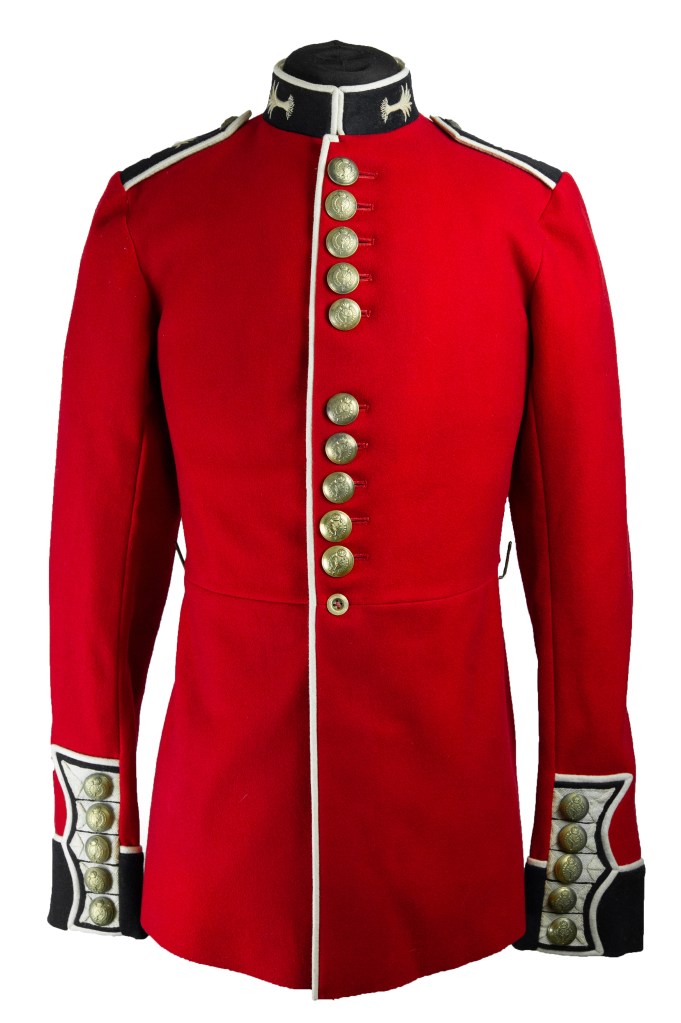
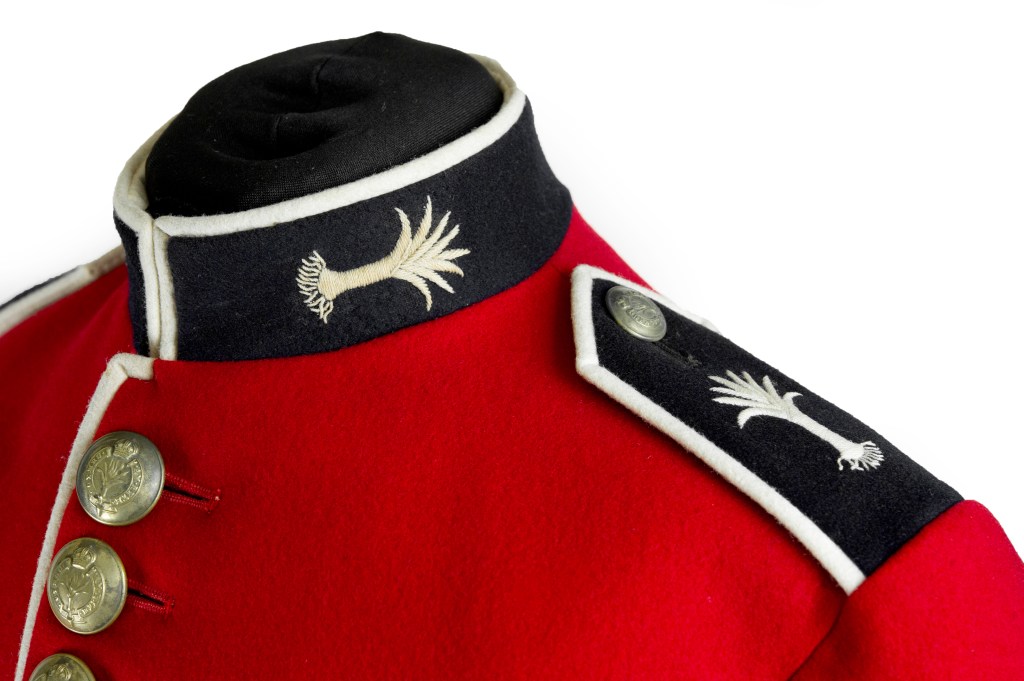
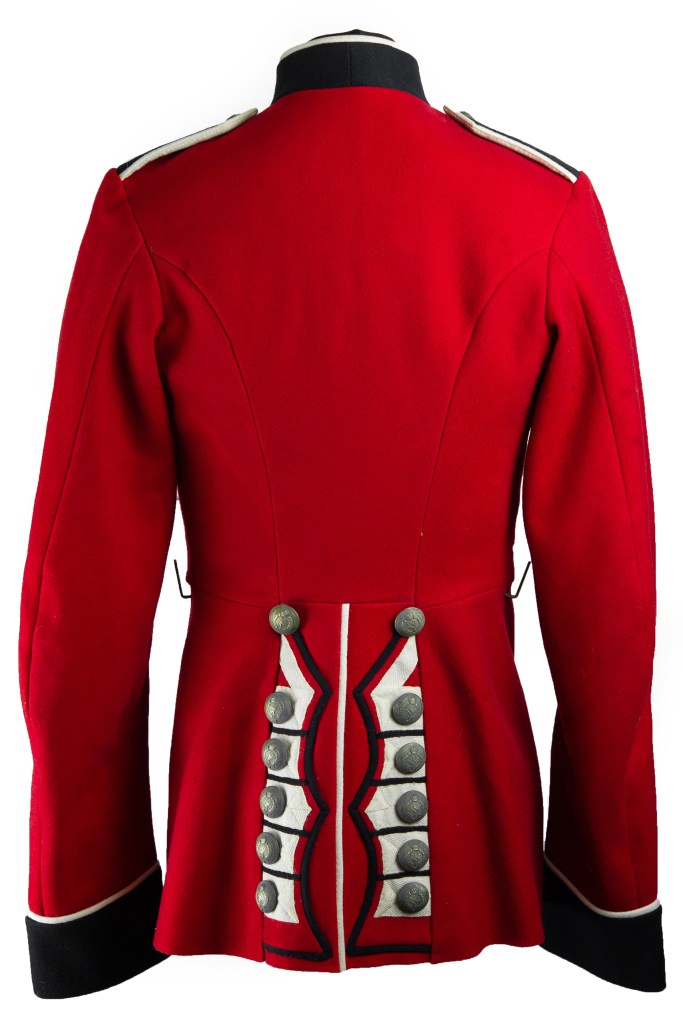
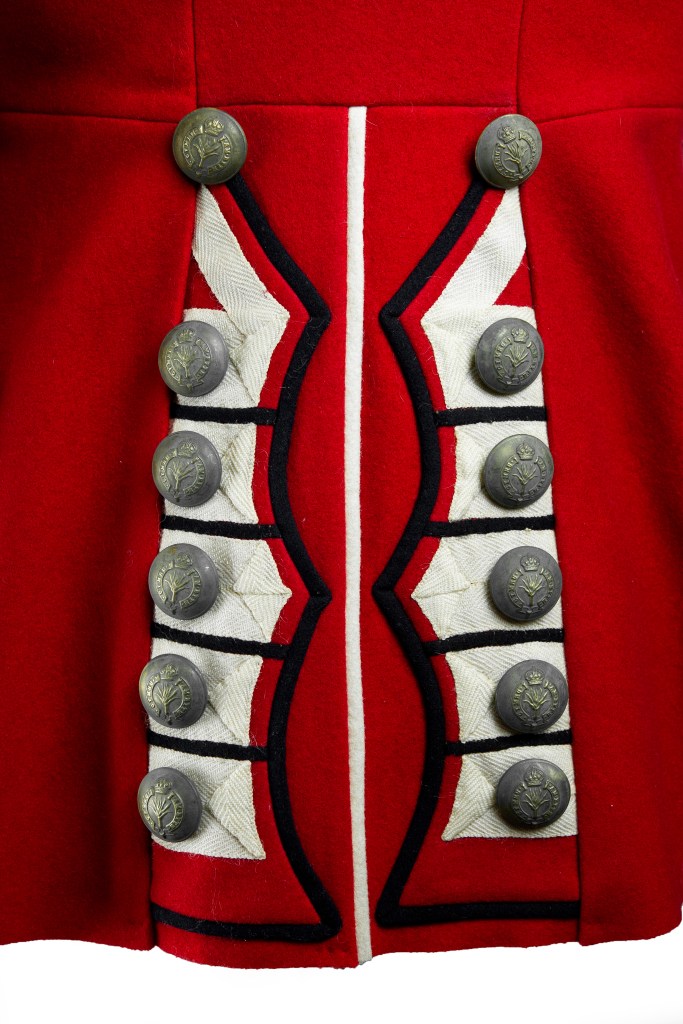
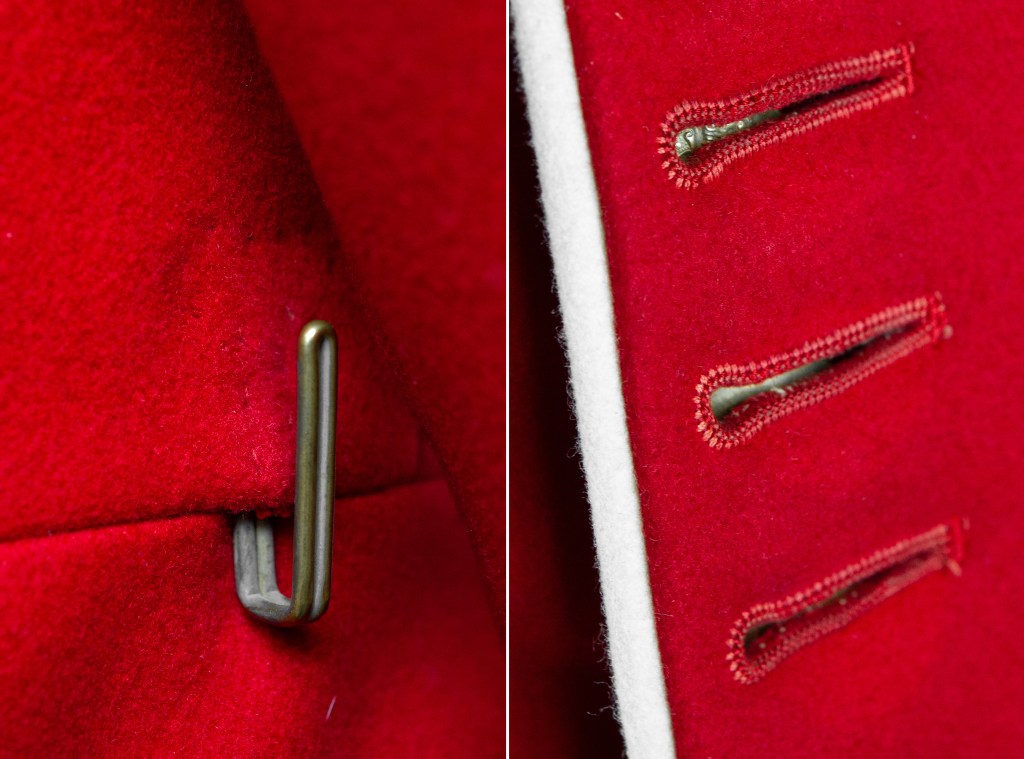
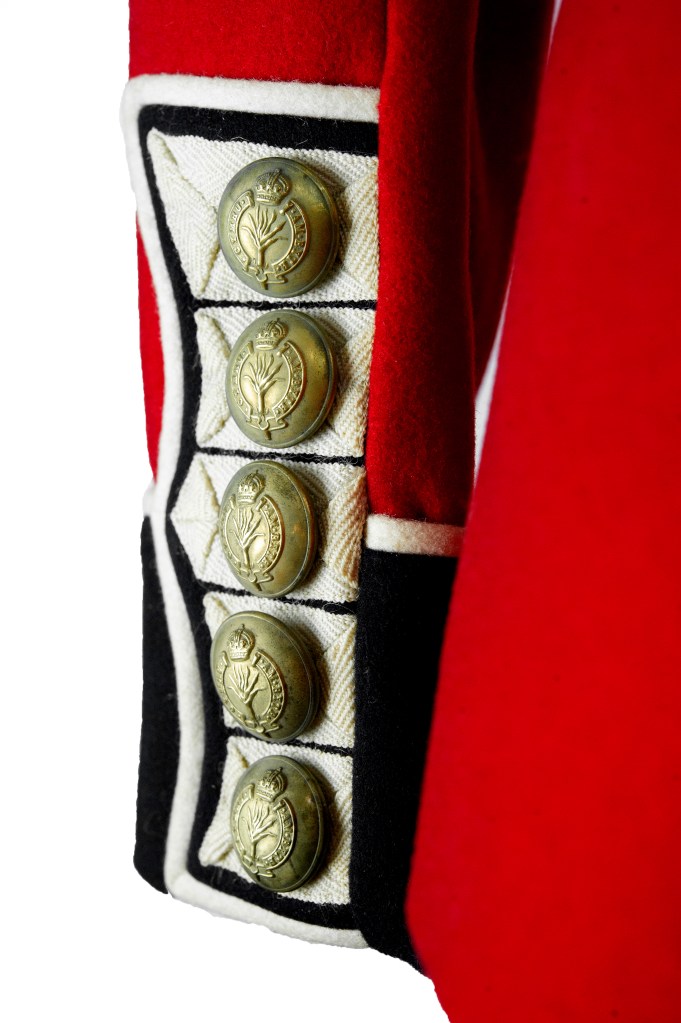
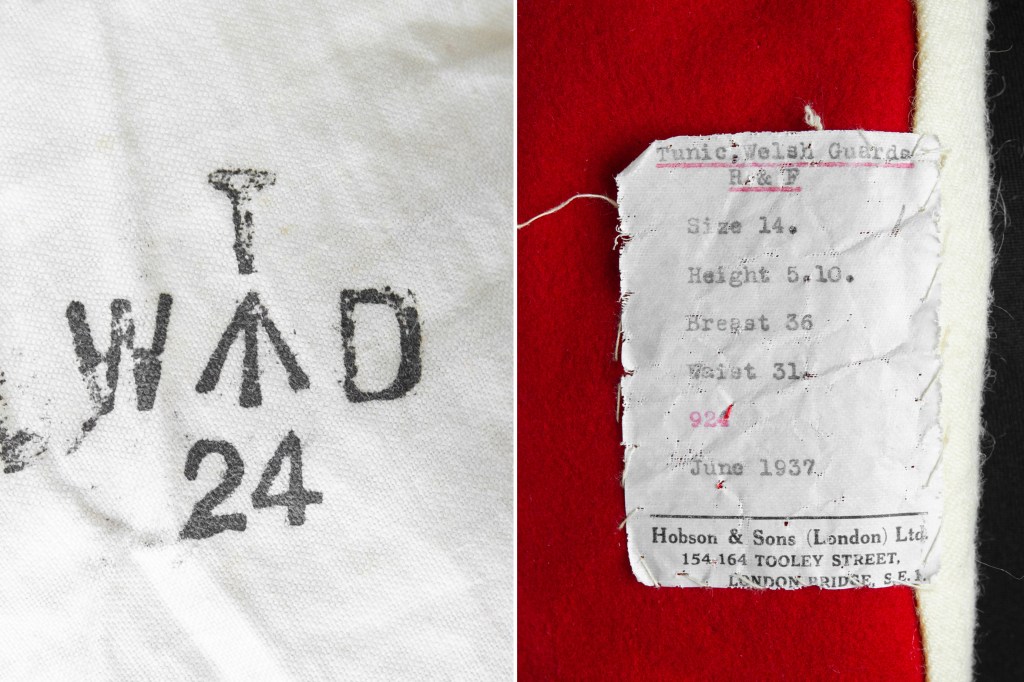
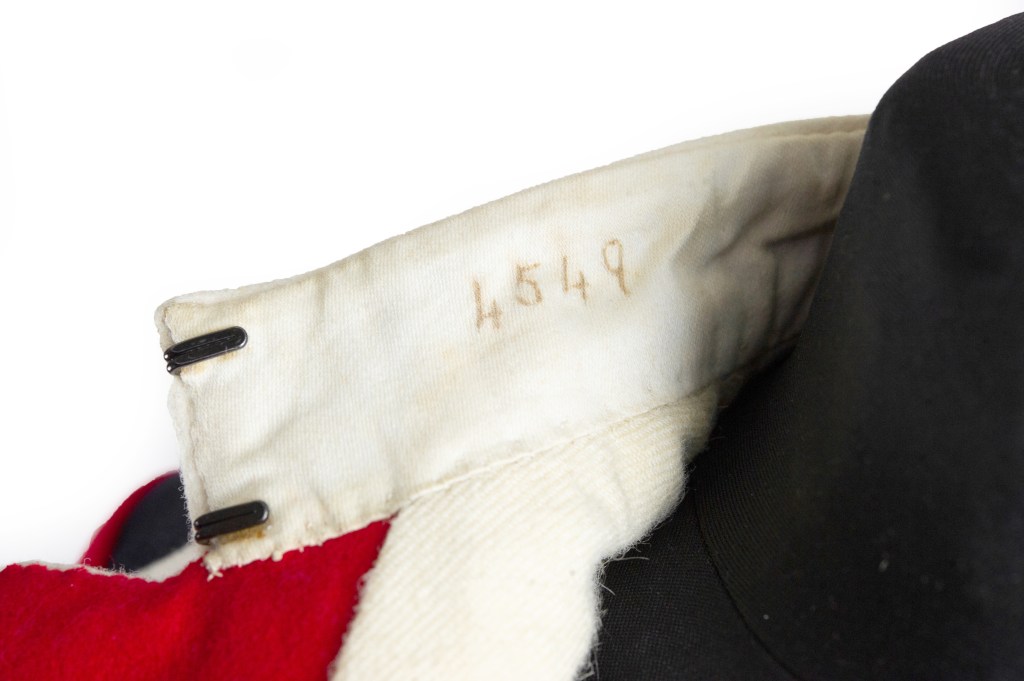
It really is a beautiful, high-quality and hand-made garment. It’s adorned with 32 buttons in total, all made by Smith & Wright Ltd. This was rather unexpected, as all of the buttons I own (I have at least 80 that were retained by former Welsh Guardsmen) are made by Firmin & Sons.
As can be seen, the label shows the garment name as ‘Tunic Welsh Guards R & F’ (which I assume is Rank & File i.e. not officers), various size markings and that it was made by Hobson & Sons (London) Ltd. in June 1937.
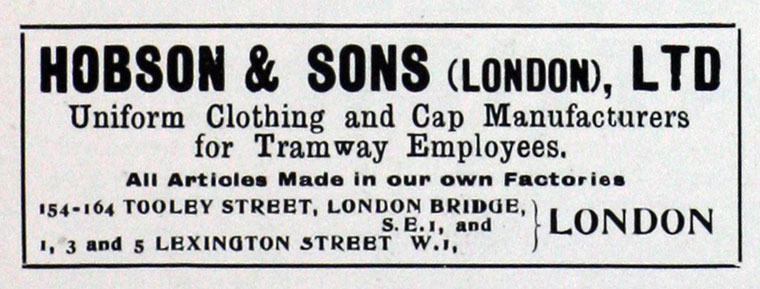
I have read that Hobson’s began their uniform business near Woolwich Barracks in South London. By 1860 they apparently had some five factories in the Woolwich area.
The factory and offices in Tooley Street (between London Bridge and Tower Bridge) was opened in c.1900 and almost exclusively made garments and accessories for Guards uniforms (not withstanding the above advertisement that offers ‘other’ items). The Companies House register shows that this firm has only very recently been dissolved in September 2025.
Inside the left sleeve it also contains the War Department stamp featured above. Note the date letter ‘T’ ,which corresponds to 1937.
In addition, and more importantly … whilst a little faded, on the inside the collar is written … ‘4549’!
Enter The Owner: Guardsman 2734549 Denis George Sullivan
Using the resources available to me, and as explained in other posts here about ‘numbering convention’ and identity, I can undoubtedly say that this tunic was issued to Guardsman 2734549 Denis George Sullivan.
Denis was born on 15 April 1917 to David and Kate Sullivan. David, his father, was born in Cork and later settled at 12 George Street, Dowlais where he was employed as a steel rail checker at the Dowlais Steel Works. He also served with the Army Service Corps during the First World War.
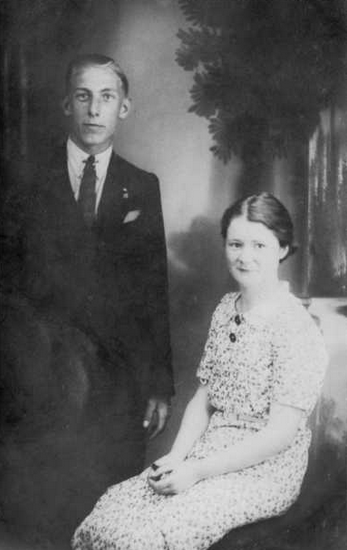
Incidentally, my Grand Mother, Irlys Williams’s family were also from Dowlais. The Williams’s ran the local barbershop at 45 Victoria Road, Dowlais. Given this, it is highly likely that Denis would have known members of my own family; he may even have had his hair cut at my family’s shop!
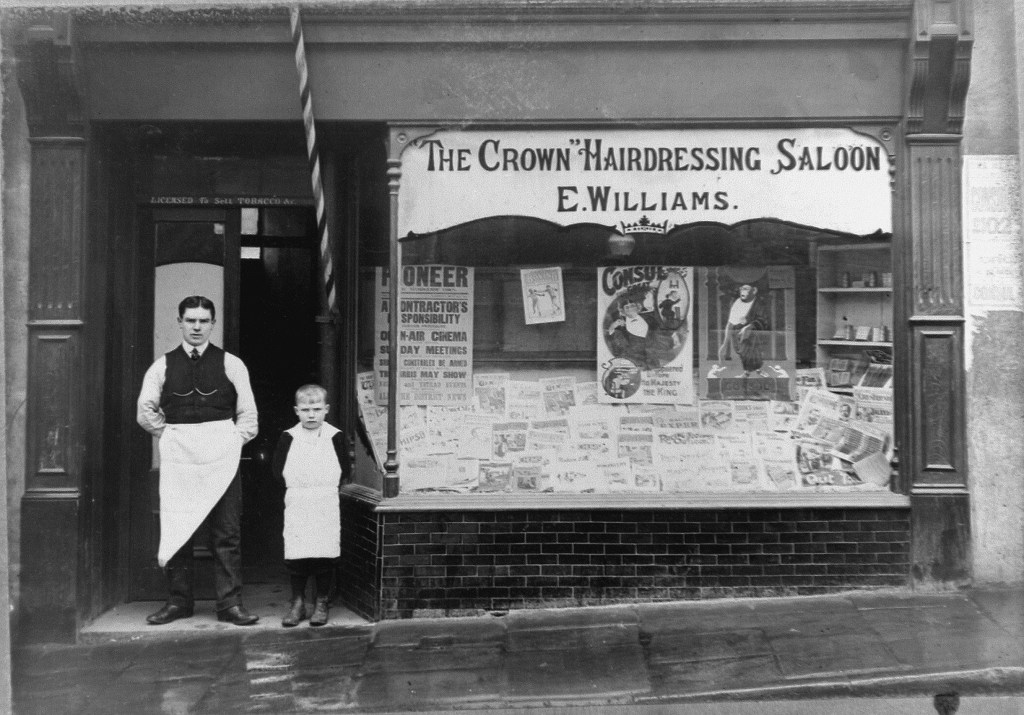
Denis enlisted in the Welsh Guards on 20 August 1938 aged 21. As a pre-war soldier he would have been issued this very tunic. As can be seen from the photographs, whilst it remains in pristine condition, it does show evidence of wear, for example some sweat staining on the inside of the collar.
I was extremely lucky to find some photographs of Denis whilst searching Ancestry. It would have been even more amazing to have found one of him wearing the said tunic, but nonetheless, like I said … extremely lucky!
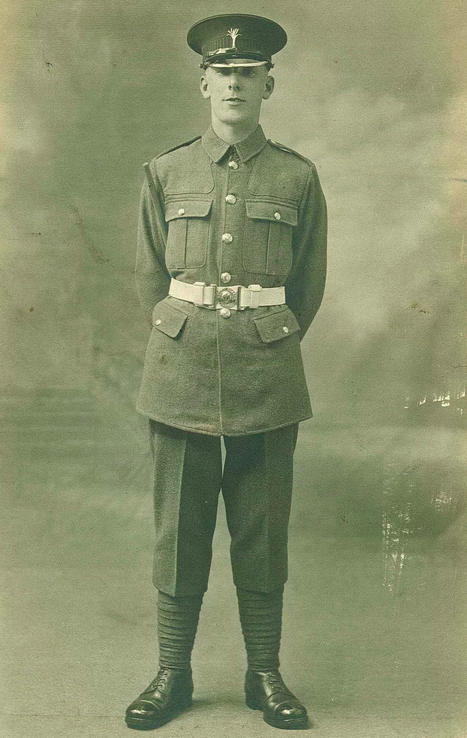
Photograph taken from Ancestry Family Tree
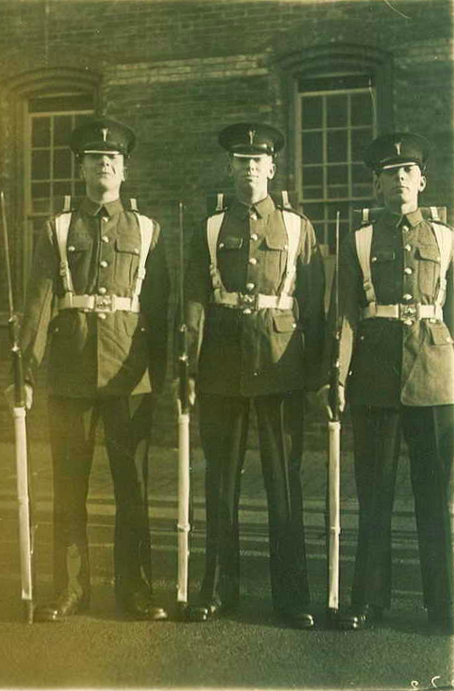
Denis went to France with 1Bn and fought as a part of the British Expeditionary Force (B.E.F.) . He was reported as missing whilst the battalion were engaged in the rear-guard action at West Cappel on 29 May 1940.
His details were circulated to Prisoner of War camps in an attempt to trace him, but sadly, he was later confirmed as having being killed in action by the German Authorities.

The action at West Cappel is covered in the excellent regimental history ‘Welsh Guards at War’ by Major Ellis on pages 107 to 113. It was during this action that then Capt. Jocelyn Gurney won one of his M.C.s as discussed in my last post on this site.
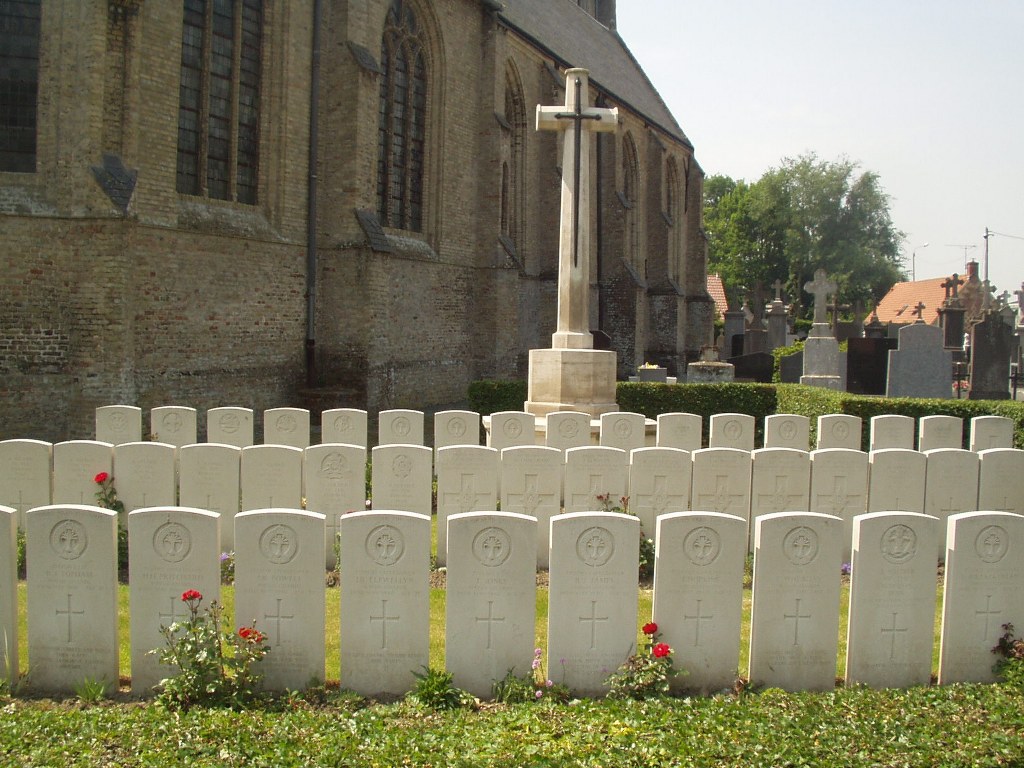
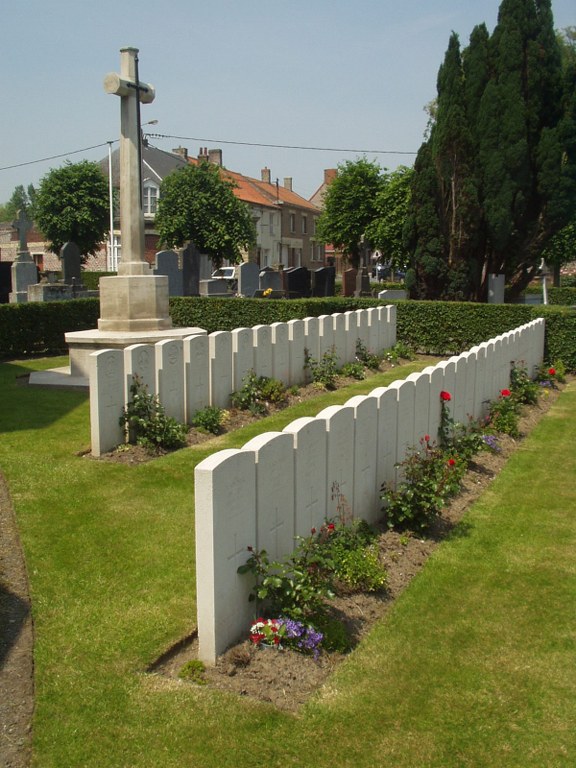
Denis is buried alongside 19 other fallen 1Bn men at West Cappel Churchyard. Readers will notice several of the men listed as missing in the above image were later confirmed as having been killed in action and subsequently buried at West Cappel:
| Number | Forename(s) | Surname | From |
| 2733292 Gdsm. | David Patrick | Burge | N/K |
| 2733601 Gdsm. | Ronald W. A. | Woodage | Peckham London |
| 2733811 L/Sjt. | Albert David | Randall | Caeran Glamorgan |
| 2734031 Gdsm. | Graham | Thomas | Morriston Swansea |
| 2734038 L/Cpl. | Edward | Wheatley | Townhill Swansea |
| 2734042 Gdsm. | Idwal | Hopkins | Morriston Swansea |
| 2734273 Gdsm. | Bryn | Davies | Aberfan Glamorgan |
| 2734321 L/Sjt. | Ronald John | Topham | Monkswood Mons. |
| 2734413 Gdsm. | Hugh Henry | Pritchard | Holyhead Anglesea |
| 2734423 Gdsm. | Lawrence | Fazackerley | Preston Lancashire |
| 2734463 Gdsm. | Thomas | Jones | N/K |
| 2734549 Gdsm. | Denis George | Sullivan | Dowlais Glamorgan |
| 2734580 Gdsm. | Samuel Lloyd | Griffiths | Trevor Denbigh. |
| 2734779 Gdsm. | John Rhys | Powell | Pontygwaith Glamorgan |
| 2734908 Gdsm. | Thomas Patrick | O’Brien | Porth Glamorgan |
| 2735010 Gdsm. | Robert John | James | Cardiff |
| 2735073 Gdsm. | Alfred William | Holland | Grange Cardiff |
| 2735089 Gdsm. | William | Vaughan | Trefriw Carnarvon. |
| 2735127 Gdsm. | Desmond C. J. C. | John | Tenby Pembs. |
| 5334530 Gdsm. | Ivor Richard | Llewellyn | Battersea London |
A Final Note …
As all of my research has rather exclusively surrounded 3Bn, I have no further details regarding Denis’s service at present (him being in 1Bn). Once ‘The Forgotten Fighting Third’ has been published, I will almost certainly return to him and his case, and will attempt to find out more.
Acquiring the tunic, as per all of my other identifiable items, always leads me down a path of trying to find out as much as possible about the related individual. These mini-projects often turn up a wealth of information which then enables me to retell, albeit very briefly, an individuals story.
Whilst in Denis’s case this story is one of tragedy, it nevertheless reminds the reader of the tens of thousands of young men who gave their lives to protect the nation from the existential threat of the fascist and totalitarian Nazi regime.
I hope in some way that this article brings Denis’s ultimate contribution, alongside the other 19 Welsh Guardsmen who lie beside him, to the fore.
We shall remember them – Cymru am Byth.
A massive thank you to Paul for the tunic and ‘Taff’ for the connection.
Diolch yn fawr iawn,
Gareth
- As a point of interest and from an etymological perspective, ‘Coch‘ is the Welsh word for the colour red. ↩︎
 Camouflaged Fist
An excellent article and very well researched and informative. Well done.
LikeLiked by 1 person
Thank you Mark 👍
LikeLike